
Wisdom of the Crowd
Quick answer
Wisdom of the crowd is the statistical phenomenon where aggregated independent judgments outperform experts — when four conditions hold.
Wisdom of the Crowd: Definition, Conditions & When It Fails
Wisdom of the crowd is the statistical phenomenon where the aggregated, independent judgment of a diverse group outperforms individual experts on estimation and prediction tasks. The result is not magic. It depends on four structural conditions (diversity, independence, decentralization, and aggregation), and it collapses when organizations accidentally destroy the one condition that matters most: independence.
Most enterprise idea management platforms get this wrong. They show vote counts, trending badges, and leaderboard rankings in real time, then call the output "crowd wisdom." The mechanism they trigger is not aggregation; it is social influence. Later voters anchor on early signals instead of forming independent estimates, and the crowd's diversity cancels itself out.
TL;DR
- The phenomenon is a statistical mechanism, not a claim that crowds are naturally smart.
- Four conditions must hold: diversity of opinion, independence, decentralization, and aggregation.
- Independence is the easiest condition to destroy and the most common point of failure in enterprise programs.
- Visible vote counts and early authority signals manufacture consensus that mimics crowd wisdom.
- Prediction markets preserve independence by aggregating price signals instead of visible votes.
- Crowds work best on cognition problems with measurable answers; they fail on creative, aesthetic, or strategic questions without ground truth.
- Enterprise programs should collect blind estimates first, reveal results only after submission closes, and choose aggregation mechanisms that hide individual positions.
The mechanism is not a democratic slogan or a justification for open voting. It is a narrow, well-defined, and fragile statistical tool. The organizations that benefit from it design programs that protect the conditions it requires.
What made a county fair Crowd smarter than the experts?
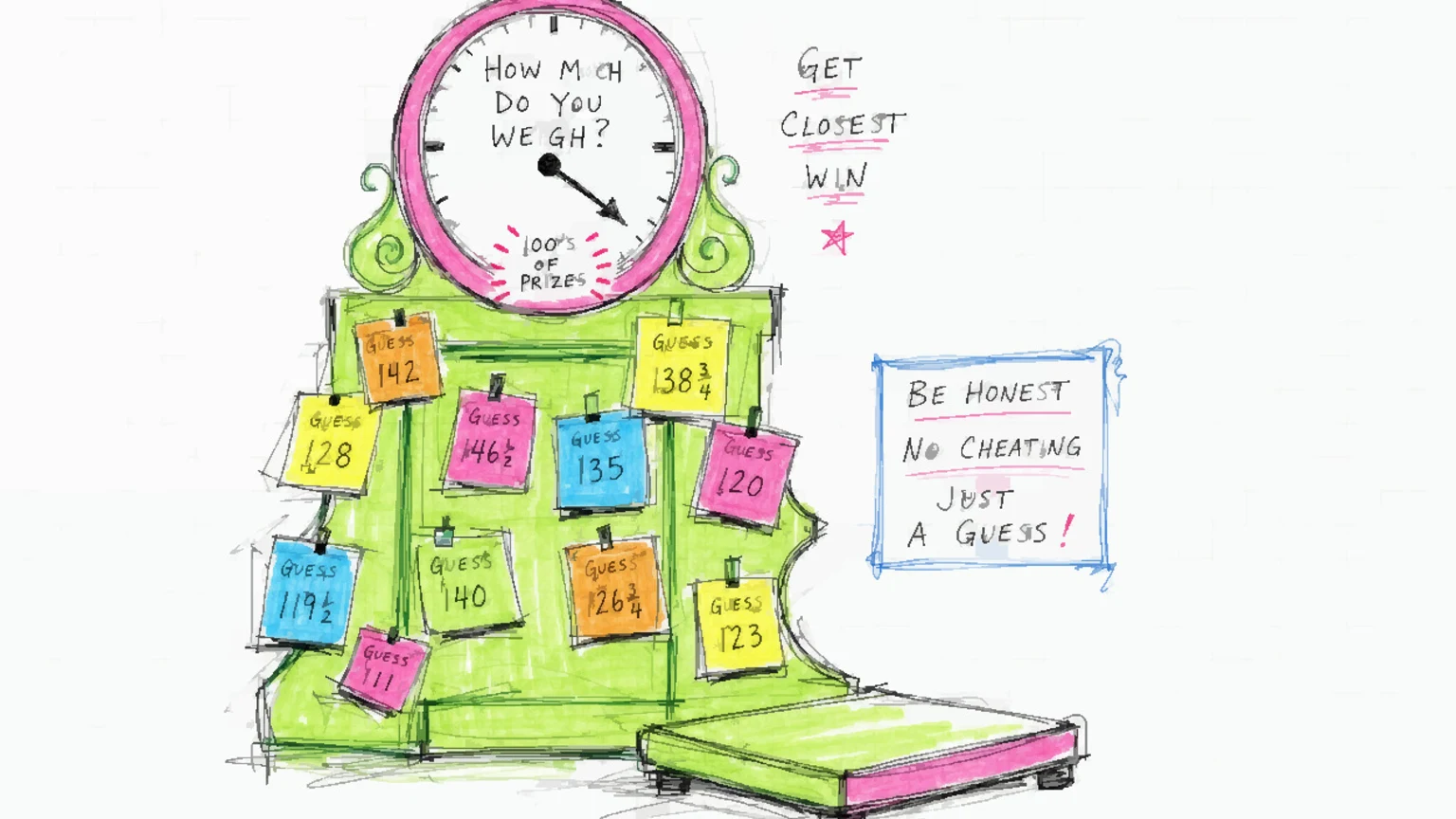
In 1906, a mixed crowd at a county fair estimated an ox's dressed weight more accurately than the livestock experts present. The median guess was 1,207 pounds and the actual weight was 1,198 pounds. Francis Galton, who arranged the analysis, had expected the crowd to fail.
In 1906, a mixed crowd of farmers and townspeople at the West of England Fat Stock and Poultry Exhibition estimated the dressed weight of an ox more accurately than the livestock experts present. And the median estimate was 1,207 pounds; the actual dressed weight was 1,198 pounds — an error of less than 1 percent Francis Galton (1907).
Galton's accidental experiment
Francis Galton, the statistician who arranged the analysis, had expected the crowd to fail. He wanted to demonstrate that popular judgment was unreliable. Instead, the 787 valid entries, after Galton weeded out 13 defective cards, produced a collective estimate that was almost exactly right Galton's Nature letter. Modern reanalysis by Kenneth Wallis (2014) found small slips in Galton's published numbers: the true dressed weight was closer to 1,197 pounds and the true median closer to 1,208 pounds, with the mean at 1,197 pounds. The core finding is unchanged the ox-weight experiment.
The crowd worked because Galton had accidentally created the conditions for crowd wisdom. The participants were cognitively diverse — butchers, farmers, and townspeople with different mental models of livestock. They submitted estimates independently, on printed cards, without seeing each other's guesses. No central authority filtered the entries. And Galton aggregated the results with a simple median Francis Galton (1907).
According to the democratic principle of "one vote one value," the middlemost estimate expresses the vox populi, every other estimate being condemned as too low or too high by a majority of the voters.
Galton's own surprise is part of the evidence. He wrote that the result was "more creditable to the trustworthiness of a democratic judgment than might have been expected" Galton's Nature letter. The ox-weight contest is not a parable about the nobility of common people. It is a data point about what happens when independent, diverse errors cancel each other out.
Sub-1% error: The median crowd estimate of 1,207 pounds missed the actual dressed weight by 0.8 percent, showing how independent errors cancel in aggregation — Francis Galton, "Vox Populi," Nature (1907).
What is Wisdom of the Crowd?
This concept refers to how the aggregate judgment of a group of independent, cognitively diverse individuals consistently outperforms individual expert judgment on estimation, prediction, and some decision tasks Surowiecki (2004). Rather than claiming that crowds are wiser than individuals in general, it asserts that under specific conditions, the errors of individuals cancel out in aggregation, ultimately bringing the group estimate closer to the truth than most individual guesses.
The error-cancellation mechanism
The mechanism is statistical. Individual judgments are scattered around the true value with roughly random errors. When those errors are independent (not correlated by shared signals or social pressure), the overestimates and underestimates cancel each other out. The aggregate converges on the truth more reliably than any single contributor BizBasics / Darden School.
Scott Page's diversity prediction theorem formalizes this intuition: collective error equals average individual error minus prediction diversity. A more diverse crowd is collectively more accurate even if its individual members are less expert than a specialist Page (2007). Diversity is not a side benefit. It is the operative variable.
Groups are only smart when the people in them are as independent as possible. This is the paradox of the wisdom of crowds, or the paradox of collective intelligence, that what it requires is actually a form of independent thinking.
What wisdom of the crowd is not
It is not democracy, even though a crowd is involved. Galton did not count votes ; he took the median. It is not brainstorming, which is a way to collect ideas, not a way to average guesses. And it is not engagement. A plat form can be full of comments and likes and still destroy the very thing it claim s to measure. In fact, the livelier it gets, the more likely it is to fail.
The term also does not mean that experts are useless. Experts remain valuable when private information is scarce, when the problem requires specialized causal reasoning, or when the crowd lacks the minimum diversity to make error-cancellation work. The claim is narrower than it sounds: for estimation and prediction tasks with diverse independent inputs, the aggregate beats the average expert.
What Are the four conditions for Crowd Wisdom to work?
Crowd accuracy is not an intrinsic property of large groups. It is a contingent property that requires four structural conditions. James Surowiecki named them diversity of opinion, independence, decentralization, and aggregation The Wisdom of Crowds.
Diversity means the crowd should not all be the same kind of person. Galton had butchers, farmers, and townspeople; he did not have eight butchers. Independence means each guess is formed before anyone sees the others. Show a vote count and you have already broken it. Decentralization means nobody gets to pre-approve the entries. Aggregation is just the math you do at the end — Galton's median of 787 entries, a prediction market's clearing price, or a blind-submission platform's average score the NYU Law excerpt. The first three are about how you collect the guesses; the last is what you do with them.
The Iowa Electronic Markets test case
The Iowa Electronic Markets (IEM) are a standing test case of all four conditions operating at once. Run by the University of Iowa since 1988, the IEM allows traders to buy and sell contracts on election outcomes. Prices aggregate dispersed information without revealing individual trader positions. Across 964 polls and five presidential elections from 1988 to 2004, the market was closer to the eventual outcome than professional pollsters 74 percent of the time Berg, Nelson & Rietz (2008). In vote-share markets, election-eve forecasts averaged 1.34 percent absolute error Cambridge Core / PS:PSP (2026).
The durability matters: the mechanism does not depend on a single election cycle or a narrow participant pool.
Why the conditions are not equally fragile
While you can't easily ruin Diversity by accident—especially since organizations generally recognize when their crowd is homogeneous—Independence is fragile, shattered by something as simple as showing vote counts in real time. On the other hand, maintaining Decentralization and aggregation becomes straightforward once the program manager understands what they mean. It is this fundamental asymmetry that explains why most enterprise crowd programs fail on independence, not on the other three conditions.
Why is independence the hardest condition to keep?
Independence requires each participant to form an estimate before seeing anyone else's guess. It is fragile inside organizations because rankings, endorsements, and praise make social information visible. Once people anchor on visible consensus, their errors stop canceling out James Surowiecki.
Indep endence means you guess before you look at your neighbor's paper. That is all i t means. But it is nearly impossible to preserve inside a company, because compa nies are machines for making social information visible. Rankings, endorsements, hallway praise — all of it is useful in ordinary life, and all of it poisons thi s particular mechanism Surowiecki's conference talk.
The Lorenz experiment
Lorenz et al. (2011) quantified the cost. In a controlled experiment with 144 participants across 12 sessions, subjects estimated geographical facts and crime statistics over five consecutive rounds. Some participants received social feedback about others' estimates before submitting their own. The result was three named effects. The social influence effect diminished the crowd's diversity without improving its collective error. The range reduction effect pushed the true answer to the outer limits of the estimate range. The confidence effect pumped up participants' confidence with accuracy lagging behind gain Lorenz et al. (2011).
We demonstrate by experimental evidence (N = 144) that even mild social influence can undermine the crowd-wisdom effect in simple estimation tasks.
— Lorenz et al., "How social influence can undermine the crowd-wisdom effect," PNAS (2011)
The authors explicitly frame their results as undermining the independence condition required for wisdom of crowds the PNAS social-influence study. Their experiment did not study peer pressure or group cohesion. It studied what happens when people see aggregate social signals before committing to their own estimate — the exact feature built into most enterprise idea management platforms.
What destroys independence in practice
Visible vote tallies, popularity rankings, trending labels, and executive endorsements all function as social signals. They allow a participant to anchor on visible consensus instead of private reasoning. Once that happens, errors stop being independent and start being correlated. The overestimates and underestimates no longer cancel out Lorenz and colleagues.
Research on authority bias shows that people are more likely to trust and adopt information from perceived authority figures, even when that information is inaccurate the social-contagion explainer. Independence does not survive social visibility. The same dynamic scales to enterprise settings when authority figures or visible rankings substitute for the confederates.
How Enterprise platforms accidentally destroy the one condition that matters
Enterprise idea platforms that show live vote counts, trending badges, or leaderboards before voting closes manufacture consensus rather than aggregate wisdom. Later voters anchor on early signals instead of forming independent estimates, which collapses the crowd's diversity.
Enterprise idea platforms that show vote counts before voting closes don't aggregate wisdom — they manufacture consensus that mimics it. The mechanism is precisely what Lorenz (2011) and Muchnik (2013) documented in the lab: early social signal collapses diversity, inflates confidence in the emergent consensus, and degrades accuracy.
The live-vote-count problem
When an idea management platform shows vote tallies in real time, later voters do not form independent estimates of idea quality. They anchor on the visible signal. The crowd's diversity collapses not because participants agree, but because they conform Lorenz et al. (2011).
Muchnik et al. (2013) ran a large-scale randomized experiment on a social news aggregation site. Items randomly assigned an early positive vote received final ratings 25 percent higher on average, purely through social influence. Positive social influence increased the likelihood of positive ratings by 32 percent Muchnik et al. (2013). The same mechanism operates on enterprise idea platforms: early voter behavior cascades into the outcome.
Positive social influence increased the likelihood of positive ratings by 32% and created accumulating positive herding that increased final ratings by 25% on average.
— Muchnik et al., "Social Influence Bias: A Randomized Experiment," Science (2013)
+32% positive-rating likelihood: Early positive social influence increased the chance of a positive rating by 32 percent and created accumulating herding that raised final ratings by 25 percent on average — Muchnik et al., Science (2013).
The HiPPO variant
The HiPPO variant is damaging through the same mechanism. Even without visible vote counts, if a senior leader publicly endorses an idea before voting closes, the authority signal functions as a social anchor. This is not a cultural problem. It is a mechanistic destruction of the independence condition. The highest-paid person's opinion becomes the prior that everyone else updates toward the authority-bias video.
What manufactured consensus looks like
From the outside, the most-voted idea in a visible-voting platform looks like the crowd's choice. It is not. It is the idea that acquired early visible momentum. The result looks like crowd wisdom; it is manufactured consensus. The platform's engagement metrics may rise while its accuracy collapses. The organizations that run these programs often report high participation and then wonder why the winning ideas fail downstream.
The companies that have systematically fixed this problem show the cost in reverse. Cowgill and Zitzewitz (2014) surveyed corporate prediction markets at Google and Ford — both replaced conventional forecasting processes with blind, anonymized price-signal aggregation. Google's internal markets outperformed expert forecasts at 0.727× mean-squared error; Ford's at 0.742× Cowgill & Zitzewitz (2014). The baseline they beat was conventional corporate forecasting, where social signals from colleagues, managers, and prior projections shape estimates before submission. No large-scale enterprise idea-platform study has published a direct negative post-mortem, but the inverse evidence is clear: removing visible social influence from the aggregation window measurably improves accuracy.
The dashboard looks healthy. More people voted, more people commented, more people came back. The one metric that does not appear on the dashboard is the on e that matters: whether the guesses were still independent. Once that is gone, t he crowd is not doing anything clever. It is just a room where the first person to speak loudly gets repeated.
What Are the four ways Crowd Wisdom breaks down?
Crowd wisdom breaks down in four distinct ways: information cascades, social influence or herding, homogeneity, and the HiPPO effect. Each failure destroys a different condition, and the cure depends on which one you have.
The four fai lure modes are not flavors of the same mistake. They are different bugs with dif ferent fixes. A cascade is what happens when people look at the line in front of them and decide their own information is not worth much. Herding is what happens when they just want to stand with the group. Homogeneity is what happens when ev eryone in the room already thinks the same way. And the HiPPO effect is what hap pens when the boss picks first. Each one breaks the mechanism, but the cure depe nds on which one you have.
Cascades versus herding
Information cascades differ from social influence in an important way. A cascade is rational: after observing enough consecutive prior choices, a participant's own private signal becomes statistically irrelevant, and deferring to the visible sequence is the correct Bayesian move Bikhchandani, Hirshleifer & Welch (1992). Herding is psychological: the participant conforms to avoid standing out the PNAS social-influence study. The interventions overlap (hide early signals), but the diagnosis matters for program managers who want to explain the failure to stakeholders.
By the Numbers: The Evidence for Crowd Accuracy (and Its Limits)
Quantified evidence across 120 years shows crowd aggregation works when independence is preserved and degrades when social influence enters. Galton's ox, Iowa Electronic Markets, HP's prediction markets, and Lorenz's experiment make the case concrete.
The evidence for crowd accuracy spans 120 years and multiple domains. The evidence for its fragility under social influence is equally quantified.
| Evidence | Finding | Source |
|---|---|---|
| Galton's ox, 1906 | Median estimate 1,207 lb vs actual 1,198 lb; 0.8% error the ox-weight experiment | Galton, Nature (1907) |
| Iowa Electronic Markets, 1988–2004 | Market closer to outcome than polls in 74% of 964 head-to-head comparisons the International Journal of Forecasting study | Berg, Nelson & Rietz, Int. J. Forecasting (2008) |
| Iowa Electronic Markets, vote-share | Election-eve forecasts average 1.34% absolute error in U.S. presidential elections the IEM 2024 analysis | Cambridge Core / PS:PSP (2026) |
| Iowa Electronic Markets, 1988–2020 | Outperformed polls in 74% of U.S. presidential elections Prediction Today (2026) | Prediction Today (2026) |
| Lorenz et al. social-influence experiment | Social influence reduces estimate diversity without improving accuracy; confidence rises despite no accuracy gain Lorenz and colleagues | Lorenz et al., PNAS (2011) |
| Muchnik et al. social-influence bias | Early positive vote → +25% final ratings; +32% likelihood of positive ratings the Science herding experiment | Muchnik et al., Science (2013) |
| HP prediction markets | Outperformed official sales forecasts in 6 of 8 cases; direction correct in all 8 Chen & Plott (2002) | Chen & Plott, Caltech Working Paper (2002) |
| Corporate prediction markets | Google market MSE 0.727× expert MSE; Ford 0.742× the Berkeley corporate-prediction-markets study | Cowgill & Zitzewitz, Berkeley (2014) |
74% of elections: The Iowa Electronic Markets were closer to the outcome than professional pollsters in 74 percent of 964 head-to-head comparisons from 1988 to 2004 — Berg, Nelson & Rietz, Int. J. Forecasting (2008).
The headline pattern
The table passes the isolation test: a reader who sees only this section gets the numerical case without needing the narrative. Crowd aggregation works when the four conditions hold, and measurable damage appears as soon as independence is compromised. The Lorenz and Muchnik rows quantify the cost; the IEM, HP, and Cowgill rows quantify the gain from preserving independence.
HP's Prediction Markets: What Enterprise Crowd Wisdom looks like when It works
HP's internal prediction markets worked because their design preserved all four of Surowiecki's conditions — specifically the independence condition that most enterprise programs destroy. The mechanism was price-signal aggregation, not vote counting.
The setup
In the mid-1990s, HP's forecasting group partnered with Charles Plott at Caltech to run internal markets for product sales forecasting. Twenty to thirty employees traded contracts whose payoff depended on actual sales outcomes. The market used a continuous double auction: prices aggregated the crowd's estimate without any participant ever seeing others' votes the Caltech working paper.
To ensure that participants had no knowledge of each others' identities or of the aggregated results until the experiment was over, thus limiting the effects of influence on their trading decisions, participants drew only on their personal, privately held information, general information available from HP, and the patterns of trade they observed other participants making online (based on anonymous ID numbers).
— Chen & Plott, "Information Aggregation Mechanisms," Caltech Working Paper 1131 (2002)
The design decisions
The design decisions map cleanly onto the four conditions. Anonymity preserved independence. Participants from across the company, not just the forecasting team, provided diversity and decentralization. The continuous double auction provided aggregation via price signal rather than visible vote count. And contracts settled against actual sales outcomes, supplying an external ground truth the HP prediction-market study.
The outcome
The results were consistent with the mechanism. In six of eight comparable cases, the prediction market outperformed HP's official sales forecast. The market correctly indicated the direction of the deviation in all eight cases Chen & Plott (2002). This is consistent with marginal trader theory (the principle that market accuracy is determined by an informed minority of traders whose well-calibrated positions drive the equilibrium price toward truth, regardless of how many less-informed participants also trade) — HP's pool of 20 to 30 employees did not need to be uniformly expert for the price signal to converge on accurate forecasts.
Why HP's design is the exception, not the default
Most enterprise idea management platforms do the opposite. They show who voted for what, rank ideas by popularity, and allow comments that expose individual positions. Each feature is designed for engagement. Each feature destroys independence. HP's markets were designed for accuracy first. The trade-off is real: anonymity and sealed prices produce less visible enthusiasm, but they produce better estimates.
How is Wisdom of the Crowd different from Crowdsourcing, groupthink, and swarm Intelligence?
Three terms that commonly get conflated with it are actually three different things: a collection mechanism (crowdsourcing), a poor-decision outcome (groupthink), and a dynamic convergence process (swarm intelligence). The conflations matter because they lead to the wrong design choices.
| Term | What it is | Accuracy condition | What destroys it | Enterprise design implication |
|---|---|---|---|---|
| Wisdom of the crowd | Aggregation mechanism that converts independent, diverse estimates into a collective answer | Independent errors cancel out | Social influence, homogeneity, thin participation | Blind evaluation, median or price aggregation, no mid-process visibility Lorenz et al. (2011) |
| Crowdsourcing | Open-call collection mechanism that gathers inputs from a large group | Depends on what happens after collection | Conflation with aggregation; assuming collection alone produces accuracy | Separate the open call from the aggregation method Surowiecki (2004) |
| Groupthink | Poor-decision outcome caused by cohesion-driven suppression of dissent | Not applicable — it is a failure label, not a mechanism | High cohesion, insulation from dissent, directive leadership | Use structured dissent and independent evaluation before deliberation Sunstein (2006) |
| Swarm intelligence | Dynamic real-time convergence where agents update behavior based on ongoing peer signals | Useful when adaptation is the goal; harmful when independent aggregation is the goal | Treating real-time feedback as always beneficial | Use for optimization and routing problems, not for independent estimation the information-cascade theory |
Crowdsourcing is not aggregation
Crowdsourcing describes how you gather inputs. The concept describes how you aggregate them. The two can coexist (an open prediction market is both) or be fully decoupled — an open brainstorming session is crowdsourcing without any aggregation The Wisdom of Crowds. Organizations run open-call campaigns and expect wisdom-of-crowds accuracy, but open calls are a collection mechanism, not an aggregation mechanism.
Groupthink is an outcome, not a mechanism
Groupthink is a decision-quality outcome, not a mechanism. It describes a group that reaches a poor decision because cohesion suppresses dissent. Crowd-aggregation failure is a mechanism: independence was destroyed, so accuracy collapsed. The distinction matters because the intervention is different. Groupthink is treated by breaking cohesion; crowd-aggregation failure is treated by restoring independence Infotopia.
Swarm intelligence is dynamic convergence
Swarm intelligence is dynamic real-time convergence. Agents update based on ongoing peer behavior — ant colonies, starling murmurations, some routing algorithms. The feedback loop is the point. The mechanism requires the opposite: no feedback before aggregation. Real-time convergence destroys the independence that crowd aggregation needs the Journal of Political Economy paper.
Which problems Can crowds actually solve?
Surowiecki splits the problems facing groups into three categories: cognition problems, coordination problems, and cooperation problems the NYU Law excerpt. Crowd aggregation reliably outperforms experts only on cognition problems — estimation and prediction tasks with a verifiable answer. Coordination and cooperation problems require different mechanisms entirely.
Cognition problems have ground truth
Cognition problems have ground truths that can be checked later. The ox weighed 1,198 pounds. The election winner is eventually known. Product sales are eventually reported. That post-hoc verification is what makes error-cancellation meaningful. Without it, there is no error to cancel Lanier (2010). Researchers call this property demonstrability (how much a task carries a verifiable correct answer that can eventually be checked against reality) — high-demonstrability tasks are where crowd aggregation reliably outperforms expert judgment; low-demonstrability tasks, where no ground truth exists, produce only a central tendency of preferences.
Philip Tetlock's research on expert political judgment supports the boundary. Experts are systematically overconfident on political prediction, and their calibration is worse than statistical models Tetlock (2005). Independent errors cancel; expert overconfidence compounds. That asymmetry is why crowds beat specialists on estimation tasks.
The strategic-decision trap
Strategic-decision "crowdsourcing" is typically a cooperation problem dressed as a cognition problem. Asking a broad population to vote on which product vision to pursue does not produce an accurate estimate of future market validation. It produces a preference distribution distorted by visibility and authority signals. The mechanism is wrong for the problem type.
What do people get wrong about Wisdom of the Crowd?
Four misconceptions are widespread enough to reliably produce bad programs. Each is falsified by the same evidence base that supports the phenomenon.
"Size alone produces wisdom"
Wrong. A large homogeneous group exposed to social feedback is less accurate than a small independent group. Lorenz et al. (2011) showed that social influence reduced diversity without improving accuracy the PNAS social-influence study. The operative variable is diversity multiplied by independence, not headcount. Page's diversity prediction theorem confirms that diversity, not size, drives collective accuracy The Difference.
A program manager who adds hundreds of participants but keeps visible voting is not increasing wisdom. They are increasing the sample size of a correlated signal. The errors no longer cancel; they reinforce.
"Wisdom of the crowd means the majority is right"
Wrong. Galton used the median, not a vote. Majority rule on factual estimation tasks produces a plurality pick, not error-cancellation. The aggregation mechanism determines accuracy Francis Galton (1907). A system that counts votes is not automatically a system that cancels errors.
The confusion is natural. Both mechanisms involve many people and produce a single output. But majority voting selects the most popular option. Median aggregation finds the central tendency of independent estimates. They answer different questions and require different conditions.
"Crowdsourcing is wisdom of the crowd"
Wrong. Crowdsourcing is a collection mechanism. Wisdom of the crowd is an aggregation mechanism. Running an open-call brainstorming session is not the same as deploying crowd aggregation. The two can coexist, but they can also be completely decoupled Surowiecki (2004).
A well-run open call may generate useful input but no accurate aggregate. A poorly run visible vote may produce a popular option that looks like crowd wisdom but is actually manufactured consensus.
"The crowd knows best when everyone participates"
Wrong for most strategic questions. Surowiecki's cognition boundary shows that crowd aggregation is scoped to estimation and prediction. For creative, aesthetic, or values questions, broader participation without independence is organized conformity, not wisdom You Are Not a Gadget.
When does Crowd Wisdom break down even when the conditions Are met?
Even a correctly designed crowd-aggregation program fails on certain problem types. The conditions are necessary but not sufficient. The problem must have a verifiable ground truth — without one, there is no error to cancel.
Creative and aesthetic judgment
Jaron Lanier argues that the error-cancellation mechanism requires a ground truth against which accuracy can eventually be computed. Creative and aesthetic problems — which product vision is stronger, which strategy has more long-run potential — have no fixed ground truth. The mechanism produces a central tendency of preferences, not an accurate estimate of an underlying truth Lanier's critique. Where there is no eventual answer, there is no error to cancel.
Thin markets
Prediction market accuracy degrades when participation falls below a minimum threshold. Rhode & Strumpf (2004) documented that small prediction markets generate wide price spreads and become gameable. A rough rule of thumb is that fewer than 20 active traders produces unreliable aggregates Rhode & Strumpf (2004).
The thin-market problem is easy to ignore in enterprise pilots. A program manager launches a prediction market with twelve invited participants, gets a clean result, and declares success. The next program runs with eight participants and drifts. Volume is a condition of its own.
Deliberation after aggregation
Cass Sunstein showed that deliberating groups often perform worse than statistical aggregation of individual estimates. Deliberation introduces influence cascades that aggregation would have canceled. Even when conditions are nominally met at the point of collection, post-submission deliberation can destroy independence after the fact the deliberation-vs-aggregation research.
How do you Design an Enterprise program that doesn't accidentally break Crowd Wisdom?
Four design decisions reliably preserve the four conditions. None require expensive technology. Three require resisting the default UX choices that engagement-focused idea management platforms make.
Blind first round
Collect all evaluations before revealing any results. This is the direct intervention implied by Lorenz et al. (2011): social influence degrades accuracy when it precedes commitment, so remove the social signal from the commitment window Lorenz and colleagues. A simple "blind first round, reveal second round" sequential design partially restores independence compared to constant visibility.
Structural diversity
Recruit participants with genuinely different domain backgrounds, organizational roles, and tenure. Do not limit idea evaluation to the team closest to the problem. Page's diversity prediction theorem shows that a more diverse crowd is collectively more accurate even if individual members are less expert the diversity-prediction theorem.
Woolley et al. (2010) found that the collective intelligence factor of groups is predicted by equal participation and social sensitivity — not by individual IQ or group cohesion Woolley et al. (2010). Blind evaluation enforces equal participation by preventing a few senior names from dominating the signal before others submit.
Choose the right aggregation mechanism
Price-signal aggregation via prediction markets or blind scoring with median aggregation is more accurate than open voting with visible counts. The choice depends on whether the program needs point estimates or rankings Wolfers & Zitzewitz (2004). HP's markets used continuous double auctions because sales forecasting needed point estimates the Caltech working paper.
Reveal results only after submission closes
No participant should see how others evaluated an idea while their own evaluation is still open. This applies to vote counts, comments, leaderboards, and senior-leader endorsements. Post-aggregate reveal is fine and can drive learning without destroying the accuracy of the collected round.
Blind vs. Visible: a design-mode comparison
Before choosing a platform design, ask which goal the program is actually serving:
Blind evaluation design (goal: accuracy)
- All evaluations collected before any results are shown
- Vote tallies, trending labels, and leaderboards suppressed during the collection window
- Aggregation: median score, blind ranking, or price signal
- Senior leader input accepted but not labeled or attributed until after submission closes
- Success metric: downstream implementation rate of top-ranked ideas
Visible-voting design (goal: buy-in and alignment)
- Vote counts and rankings displayed in real time during collection
- Comments, reactions, and endorsements visible to all participants
- Aggregation: popularity ranking or upvote count
- Senior leader endorsements visible and attributed during voting
- Success metric: participation rate, engagement, and comment volume
The two designs are not substitutes. Organizations that run visible-voting programs and report the output as "crowd wisdom" get neither: the accuracy of blind aggregation nor the authentic alignment that comes from a process stakeholders trust. A decision rule for program managers: if the program's goal is idea-quality accuracy, use blind evaluation and sequential reveal. If the goal is buy-in, visible voting is appropriate — but be explicit that the output is a preference distribution, not an accuracy estimate (Lorenz et al. (2011); the HP prediction-market study).
Frequently asked questions
Core concepts
What is wisdom of the crowd?
Wisdom of the crowd is the statistical phenomenon where the aggregated independent judgment of a diverse group outperforms individual experts on estimation and prediction tasks. It requires diversity, independence, decentralization, and aggregation The Wisdom of Crowds.
What are the four conditions for wisdom of crowds to work?
Diversity of opinion, independence, decentralization, and aggregation — each addressing a different point of failure. Diversity ensures that individual mental models and information sources differ, so errors are not systematically biased in the same direction. Independence prevents social influence from correlating those errors before they can cancel out. Decentralization ensures no single authority filters or pre-ranks inputs. Aggregation is the mechanism that converts independent inputs into a collective answer — Galton's median, a prediction market price, or a blind-submission average the NYU Law excerpt.
Failure modes
What is the difference between wisdom of the crowd and groupthink?
Crowd-aggregation failure is a mechanism: independence was destroyed, so accuracy collapsed. Groupthink is a poor-decision outcome caused by cohesion-driven suppression of dissent. The interventions differ: one restores independence, the other breaks cohesion Sunstein (2006).
When does wisdom of the crowd fail?
It fails when independence is destroyed by visible votes or authority signals the PNAS social-influence study, when the crowd is homogeneous Page (2007), when the problem comes without a verifiable ground truth Lanier (2010), or when the market is too fragmented to average out individual errors the historical betting-markets study.
Distinctions
What is the difference between crowdsourcing and wisdom of crowds?
Crowdsourcing is a collection mechanism. Wisdom of crowds is an aggregation mechanism. An open prediction market does both. An open brainstorming session does only the first Surowiecki (2004).
How do prediction markets use wisdom of the crowd?
Prediction markets aggregate independent estimates through price signals. Traders do not see each other's identities or individual positions; they see only the market price. HP's internal markets outperformed official sales forecasts in six of eight cases using this design Chen & Plott (2002).
Implementation
Can wisdom of the crowd work inside a company with a hierarchy?
Yes, if the hierarchy does not broadcast authority signals before submission closes. Blind evaluation and structural diversity preserve crowd accuracy even in hierarchical innovation management organizations. The hierarchy only destroys accuracy when senior endorsements are visible during the evaluation window (Lorenz and colleagues; Muchnik and colleagues).

Clara @cla_reinholt
Focuses on innovation communication, facilitation, and turning frameworks into team habits.