





TL;DR
- Start with the decision, not the framework.
- Pick the guide that matches your live management call.
- Trust guides that name failure conditions.
- Use the glossary for terms, the system hub for breadth.
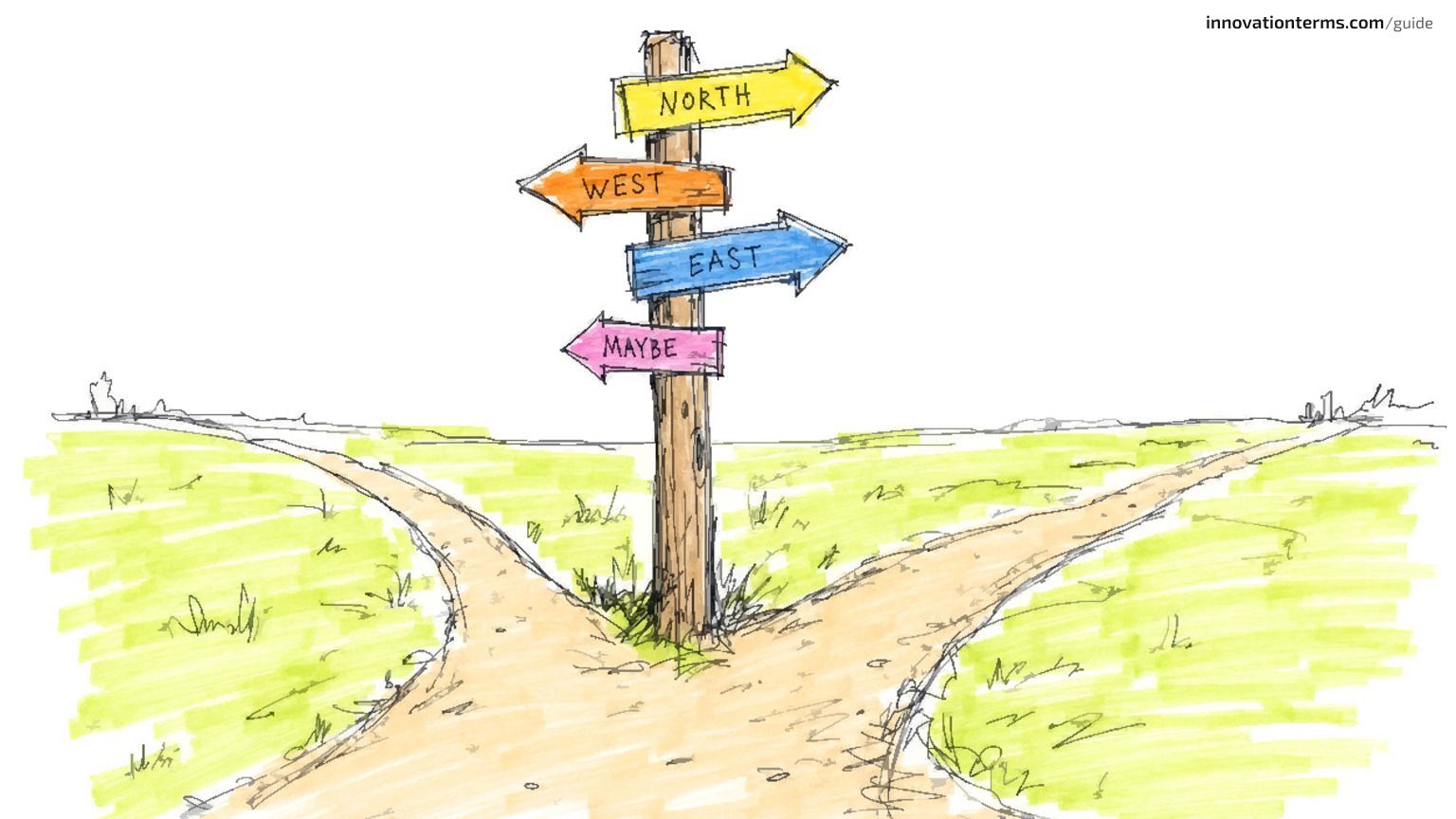
A useful innovation guide routes a reader to a specific management call. This hub is built to route a searcher toward the next useful essay: the guide for teams forcing a tidy brief too early, the guide for organizations where testing never changes decisions, or the broader operating-model piece when the question is larger than one tactic.
Each entry is a long-form essay built around a specific management decision. The point is practical innovation management: what to do with a framework, what evidence should settle the decision, and what to watch when the framework starts to mislead. They are written for people who have to defend the choice inside an organization. Not for someone casually collecting frameworks. Van de Ven (1986) defined innovation as the development and implementation of new ideas by people working inside an institutional order. A useful guide has to deal with that context. A framework summary only has to name the parts.
What do these innovation guides actually help you decide?
The difference is the decision. Each guide on this shelf is built around a specific management call a reader has to make, not around teaching another framework. They tell a team whether to keep framing the problem, whether to let experimentation change a resource choice, and whether to step back into the larger operating model before picking a tactic.
A guide names the decision it addresses and the conditions under which the advice fails; a framework overview explains stages, types, or categories. The glossary gives you the names: ideation, implementation, the ordered stages. The guide gives you the moment when the name stops helping. It tells you what decision the concept is forcing, what evidence should end the argument, and what failure waits on the far side of the cheerful advice. The skeptical operator, the one who is out of time and has a room to convince, learns the difference between reading to know the words and reading to know what to do.
Which innovation guide should you read first?
Read by decision, not by title familiarity. A visitor who matches a live situation to one route and clicks within seconds has found what a Category hub is built for.
| If this is your situation | Start here |
|---|---|
| Your team keeps forcing a clean problem statement before it understands the problem | When the problem is wrong, not the idea |
| Your org runs tests, but rank still overrules the evidence | Building a culture of experimentation that changes decisions |
| You need the broader operating model before any single tactic | How to innovate: the management system |
The table matches a management situation to the right guide. It turns a broad "innovation guides" search into a smaller decision: which guide should get the next 20 minutes. The visitor is not here to browse. The visitor has a cursor and a deadline. If the answer is not visible at card speed, the index is not doing its job.
What an Honest Guide Will Admit
The difference between a useful guide and a framework brochure is failure conditions. A guide that names the decision it addresses and honestly marks where the method stops applying is giving the reader something to verify.
Acknowledged tradeoffs. "This works, but it costs Y." Pieces that pretend there's no downside lose credibility.
— InnovationTerms, Editorial Standard
Stanford Online's innovation management guide is clear about stages, from ideation through implementation. Stage clarity is not decision utility. A guide that enables double-loop learning (revisiting the assumptions behind a decision, not just correcting the decision itself) has to get past the stage list. The dominant pages on this query stop at structure, process, or taxonomy. They do not stay long enough to name failure conditions.
Innovation runs on political capital, not stage gates. It is a negotiation between people who want things, people who control money, people who have titles. That gap matters because innovation work is social, political, and institutional, not just procedural. If a guide refuses to name the conditions under which its framework backfires, it is marketing wearing a guide's clothes. The reader notices. The reader was always going to notice.
While there are numerous normative and often process-focused depictions of DT, they seem limited in their ability to account for what occurs in practice.
— Carlgren, Rauth & Elmquist, Framing Design Thinking (2016)
By the numbers. Koning and Hasan (2021) found that firms adopting A/B testing introduce new products at a 9% to 18% higher rate than those that do not. Decisions with upside and downside that really deserve analysis, not just a stage list.
Which guide helps when your team locks the brief too early?
Read this guide when the team wants a clean problem statement before it has earned one. It sharpens one question: commit to the framing today, or stay in learning mode until the problem has enough shape to surface real tradeoffs.
The click reason is not "design thinking explained." It is the guide's colder proposition: premature clarity feels like discipline and steers the team, quietly, into the wrong problem. Frog's analysis is the right warning: design thinking often gets treated as a creative output instead of rigorous work with business consequences. According to a Design Thinker Institute episode, 87% of trained individuals said their leader either did not understand the method or did not support them in applying it. The point is concrete. A team should not lock the brief until it has evidence the brief describes the right problem.
Read Why innovation teams shouldn't start with a clear problem when the room is rewarding tidy framing before real understanding.
Which guide helps when experiments don't change decisions?
Read this guide when the company says it values testing but still lets hierarchy overrule evidence. The decision it sharpens is whether experimentation is governing choices or merely decorating dashboards.
To run experiments, however, companies need to develop strong experimentation practices as well as align their organization and culture to experimentation.
— Fabijan et al., Experimentation growth (2018)
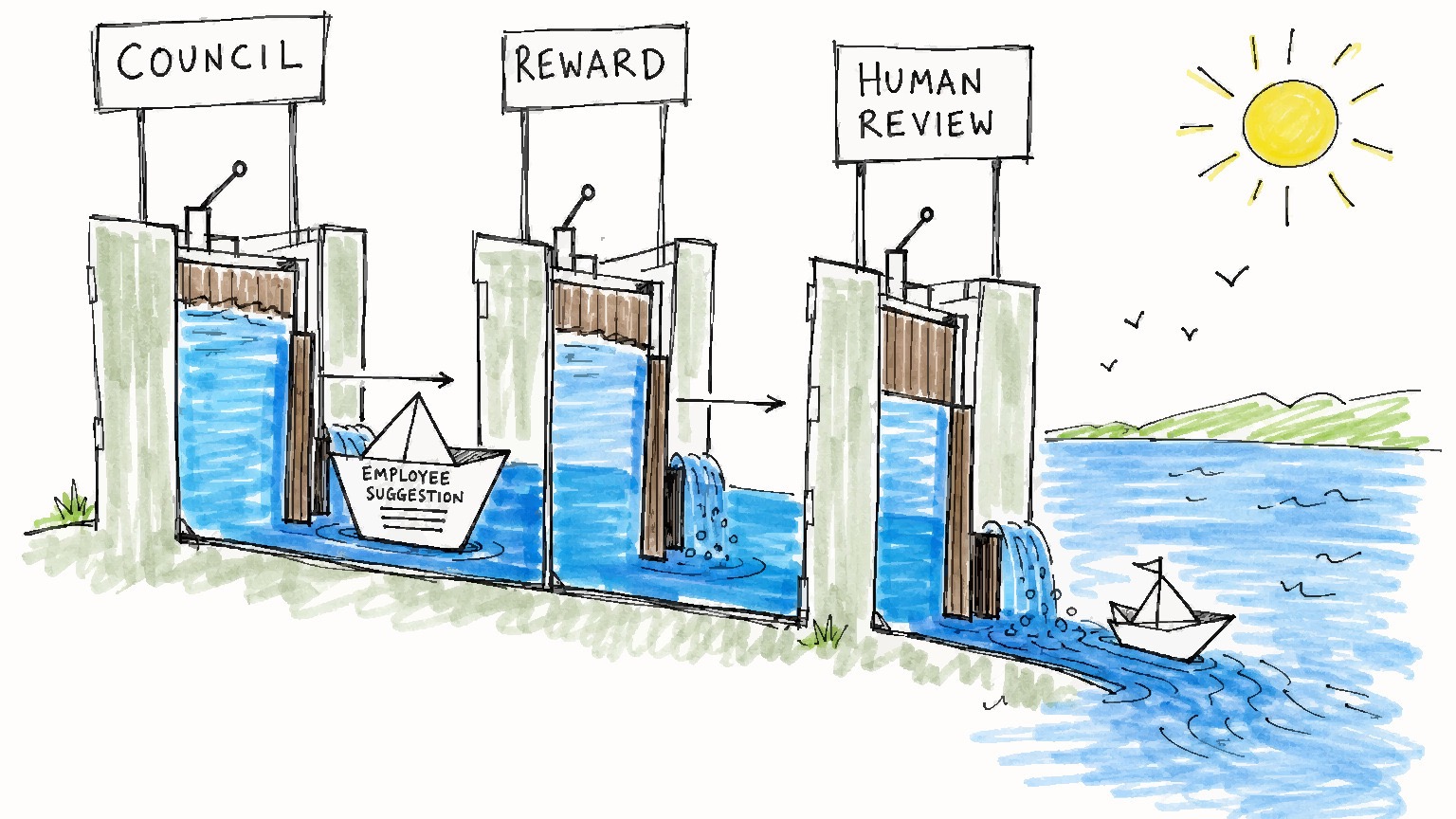
The click reason is governance, not tooling. The same research also finds that experimentation tends to pull organizations away from safe middle outcomes, which makes the productivity gain harder to evaluate in isolation. None of that matters unless validated learning (the practice of running experiments whose results are permitted to change a resource allocation or launch call) is the governing standard, not a reporting ritual. Invesp's analysis supplies the backfire condition: A/B tests help with clear, focused questions and mislead when the real issue is weak positioning, confusing navigation, or pricing. The guide is useful where it names the point at which testing changes a decision and the point at which it becomes theater.
Read How to build a culture of experimentation that changes decisions when the hard part is authority, not tooling.
Where does this hub hand you off next?
Use this hub when you know the decision you need help with, but not the right guide yet. The glossary handles term definitions. Bigger problems (ones that spill across multiple guides) belong in the operating-model hub.
| What you need | Where to go |
|---|---|
| The term defined before you read further | Innovation glossary |
| The broader management model, end to end | How to innovate |
| A specific long-form judgment call | This guide shelf |
Start here when you need the next guide.
FAQ
What is an innovation guide, and how is it different from a framework overview?
An innovation guide takes a concept to a decision. A framework overview explains the stages, types, or parts. Van de Ven's 1986 framing defined innovation as the development and implementation of new ideas by people working within an institutional order — a guide has to address that context; a framework summary only has to name the parts.
Which innovation guide should I read first?
Match the guide to the decision in front of you. A team locking the brief too early belongs on the clear-problem guide. Any org that runs tests and then lets seniority veto the numbers is exactly what the experimentation guide warns against. Broader than one tactic? How to innovate.
Are these guides practical or just theory?
The test is whether a guide changes what a team does next. Theory that does not clear that bar is decoration, and this shelf does not include it.
Who writes these guides, and why should I trust them?
Each guide here is long-form and names the point where its framework stops applying, with evidence you can check on the page before clicking.
What should I read after the experimentation-culture guide?
Move to How to innovate when the next question is how experimentation fits inside the broader management system. Move to the clear-problem guide when the next risk is not testing volume but problem framing.